
Interventional Radiology
About Interventional Radiology
Experiencing knee pain, hemorrhoids, or uterine fibroids? Interventional radiology at Minimally Invasive Medical Group offers a modern, minimally invasive solution. With offices in Lake Forest, Mission Viejo, and Irvine, California, our highly skilled surgical team uses this advanced approach to diagnose and treat various conditions, minimizing downtime and supporting faster recovery. Schedule your evaluation by phone or request an appointment online today.
- Genicular Artery Embolization
- Hemorrhoid Embolization
- Uterine Fibroid Embolization
- Prostate Artery Embolization
- Interventional Radiology
What is Interventional Radiology?
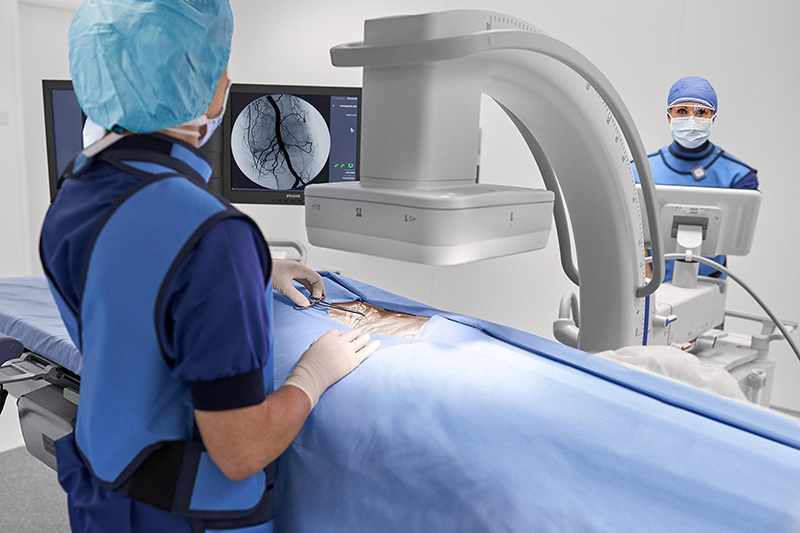
Interventional radiology at Minimally Invasive Medical Group diagnoses and treats specific diseases by precisely inserting catheters, wires, and other small tools into the body. This is guided by live X-rays, CT scans, or ultrasound images, ensuring accurate treatment within your body.
Benefits of Interventional Radiology
Choosing interventional radiology provides significant advantages:
– Reduced need for general anesthesia
– Minimal downtime
– Lower risk of complications
– Less invasive procedures
– Minimal bleeding
– Reduced scarring
– Highly effective results
Interventional radiology procedures are significantly less invasive than traditional surgeries, enabling quicker recoveries and potentially lower costs.
Conditions Treated by Interventional Radiology
Minimally Invasive Medical Group effectively diagnoses and treats various conditions with interventional radiology, including:
Knee Pain:
Interventional radiology helps pinpoint and treat the source of knee pain by targeting inflammation. Our interventional radiologists use imaging to guide a catheter into targeted knee arteries, injecting small particles to reduce blood supply, inflammation, and pain.
Uterine Fibroids:
We offer uterine fibroid embolization (UFE). Your interventional radiologist shrinks fibroids (non-cancerous uterine tumors) and reduces bothersome symptoms by injecting small particles to block their blood supply.
Hemorrhoids:
Our non-surgical approach to hemorrhoids involves hemorrhoid embolization, also known as hemorrhoidal artery embolization (HAE). Your interventional radiologist inserts particles into the blood vessels supplying the hemorrhoids, blocking blood flow and causing them to shrink.
What to Expect During Interventional Radiology Procedures
Prior to your interventional radiology procedure, follow all instructions, which may include avoiding eating or drinking. You may receive local anesthesia to numb the area and sedation for comfort.
Your specialist makes a tiny incision, inserts a thin catheter into the treatment area, and injects dye to guide the process. Using X-rays or other imaging, they identify arteries to be blocked, inject small particles into blood vessels, and then remove the catheter.
After Interventional Radiology Treatment
After your interventional radiology procedure, you will go to a recovery room. Recovery time varies by procedure type. Ensure you get ample rest, take medications as directed, and follow up with the Minimally Invasive Medical Group experts.
Schedule your interventional radiology evaluation at Minimally Invasive Medical Group by calling our office or booking your appointment online today.
Our Procedures
- Spine & Back Pain
- Endoscopic Spine
- Epidural Steroid Injection
- Facet Block
- Intrathecal Pain Pump
- Kyphoplasty
- Laser Facet Debridement
- Lumbar Sympathetic Nerve Block
- Medical Branch Block
- Nerve Root Injection
- Non-surgical Spinal Decompression
- Radiofrequency Ablation
- Spinal Cord Stimulator
- Stellate Ganglion Block
- Trigger Point Injection
- Interventional Radiology
- Genicular Artery Embolization
- Hemorrhoid Embolization
- Prostate Artery Embolization
- Thyroid Nodule Ablation
- Uterine Fibroid Embolization
- Orthopedic Regenerative Medicine
- Orthopedic Surgery
- Plasma Rich Platelet Injection
- Colorectal
- Hemorrhoid Banding
- Hemorrhoidectomy
- Infrared Coagulation (IRC)
- THD Treatment
- Rehabilitation
- DRX9000 Decompression
- Shockwave Therapy
- Heat Energy Therapy
- Physical Therapy
- Other Modalities
- Ketamine Infusions