
Plasma Rich Platelet Injection
About Plasma Rich Platelet Injection
Minimally invasive spine surgery offers major benefits compared to traditional open procedures, such as quicker recovery times and reduced discomfort. The skilled team at Minimally Invasive Medical Group focuses on advanced endoscopic techniques designed to limit tissue disruption. They provide a range of procedures for back and neck pain at their locations in Lake Forest, Mission Viejo, and Irvine, California. To explore how endoscopic spine surgery might help you, call the office nearest you or schedule a consultation online.
Plasma Rich Platelet Injection Q&A
What are platelet-rich plasma injections?
PRP is a regenerative treatment made from a sample of your blood. Your Minimally Invasive Medical Group provider puts the sample in a device that separates the platelets (cells in your blood) and plasma (the liquid part).
The combination of concentrated platelets and plasma creates PRP. Your provider uses the PRP as a treatment, injecting it anywhere in your body where tissues need help healing.
How does a platelet-rich plasma injection work?
Platelets naturally contain specialized proteins called growth factors. Whenever you have an injury, the platelets travel to the damaged tissues and release their growth factors.
The growth factors then activate cellular activities that:
- • Speed up healing
• Reduce inflammation
• Stimulate new blood vessel growth
• Support new tissue development
• Recruit stem cells to the area
Stem cells regenerate new cells that develop into all the tissues needed to repair the injury.
PRP can produce all the same results as your body’s natural healing response because the injection contains live cells.
When would I need a platelet-rich plasma injection?
PRP treats every musculoskeletal injury because it helps regenerate muscles, ligaments, tendons, cartilage, skin, and nerves.
You may benefit from a PRP injection if you have acute or chronic pain from:
- • Fractures
• Sprains
• Osteoarthritis
• Rheumatoid arthritis
• Plantar fasciitis
• Ligament injuries
• Tendon injuries
• Meniscus tears
• Tendonitis
• Herniated discs
• Degenerative disc disease
PRP injections also help if you have a slow-healing or a severe wound needing more growth factors than your body can supply.
You can also benefit from PRP if the injured tissues have a limited blood supply. The injury can’t get enough platelets to ensure healing without a healthy blood supply.
What happens during a platelet-rich plasma injection?
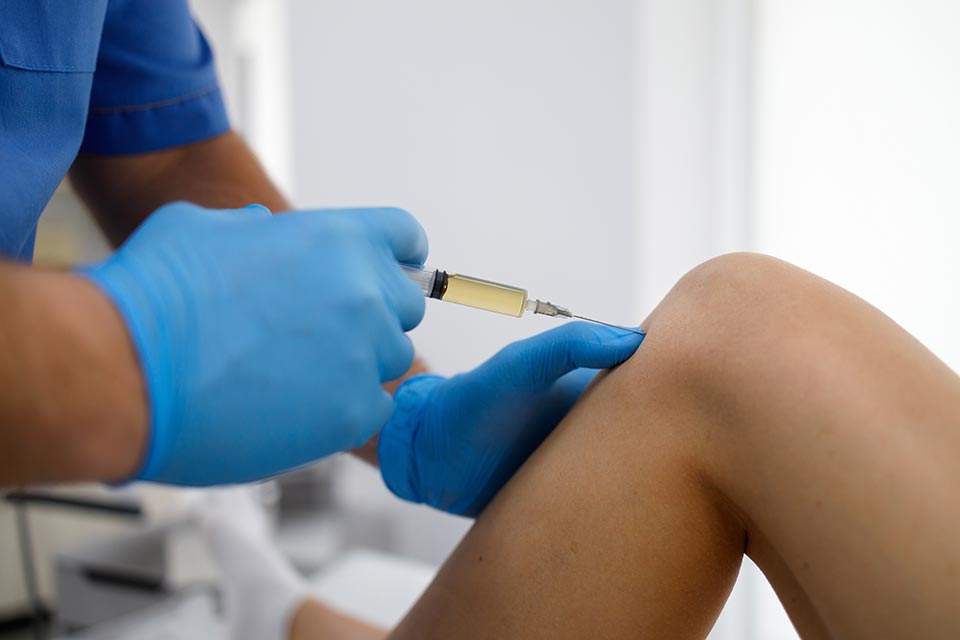
After preparing your PRP, your Minimally Invasive Medical Group provider applies a topical anesthetic at the injection site. Using ultrasound to see below the surface, they insert the needle, guide it to the damaged tissues, and inject the PRP in the area where it’s needed.
It’s common to experience minor discomfort for a short time. You may need to limit strenuous activities for a few days to give the platelets time to take hold and start healing. However, most people return to their usual activities in several days.
Call Minimally Invasive Medical Group or book an appointment online today to learn if you’re a good candidate for platelet-rich plasma injections.
Our Procedures
- Spine & Back Pain
- Endoscopic Spine
- Epidural Steroid Injection
- Facet Block
- Intrathecal Pain Pump
- Kyphoplasty
- Laser Facet Debridement
- Lumbar Sympathetic Nerve Block
- Medical Branch Block
- Nerve Root Injection
- Non-surgical Spinal Decompression
- Radiofrequency Ablation
- Spinal Cord Stimulator
- Stellate Ganglion Block
- Trigger Point Injection
- Interventional Radiology
- Genicular Artery Embolization
- Hemorrhoid Embolization
- Prostate Artery Embolization
- Thyroid Nodule Ablation
- Uterine Fibroid Embolization
- Orthopedic Regenerative Medicine
- Orthopedic Surgery
- Plasma Rich Platelet Injection
- Colorectal
- Hemorrhoid Banding
- Hemorrhoidectomy
- Infrared Coagulation (IRC)
- THD Treatment
- Rehabilitation
- DRX9000 Decompression
- Heat Energy Therapy
- Physical Therapy
- Other Modalities
- Ketamine Infusions